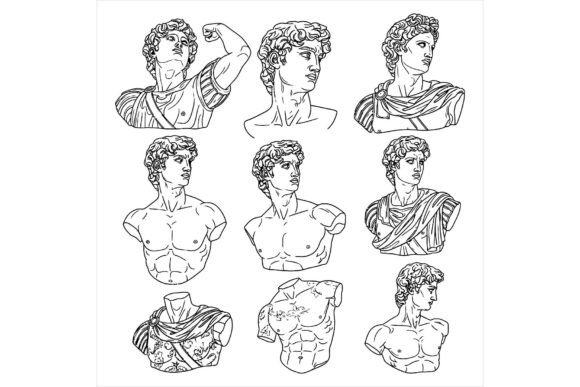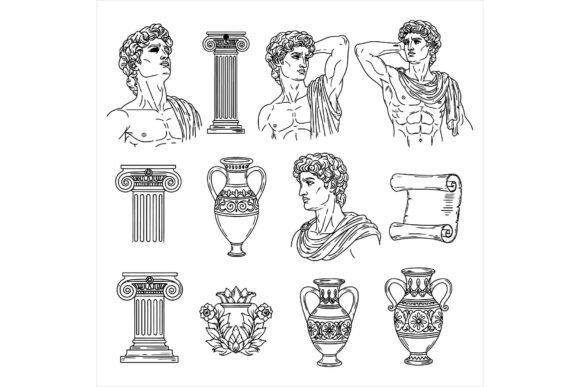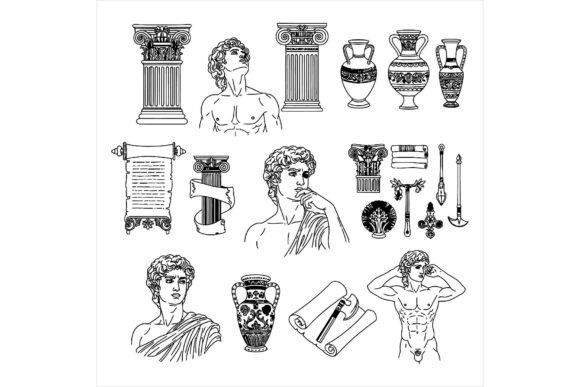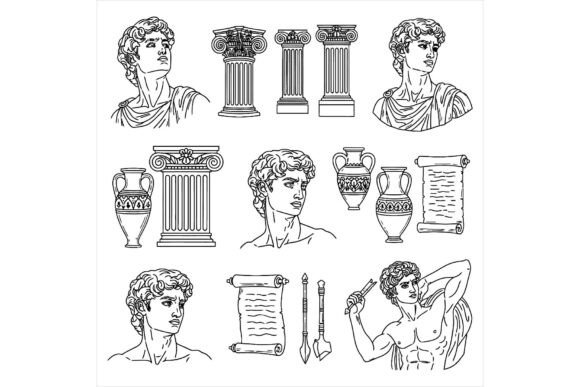
Ancient Greek Roman Art Illustrations for Digital Sellers
Product Use Scenarios
- SVG Products: Ideal for Cricut or Silhouette projects like greeting cards, wall decals, or embroidered patches.
- PNG Designs: Great for layered designs where transparency is key—think planner stickers or overlay graphics for social media posts.
- Clipart Bundles: These illustrations are modular enough to create themed clipart sets for educators, bloggers, or crafters.
- Sublimation Designs: The bold yet detailed imagery works well on mugs, tumblers, and other sublimation-compatible items.
- Printable Wall Art: The large-scale elements make these illustrations excellent candidates for A4/A3 printable posters or framed prints.
- T-Shirt Graphics: For a more artistic approach rather than casual wear, these designs could elevate a niche clothing line focused on culture or education.
- Mug and Tumbler Wraps: Their ornate details can transform basic drinkware into something that feels museum-ready.
- Nursery Prints: If stylized and simplified, they can work beautifully as historical or mythological nursery decor.
- Canva Templates: Pair them with clean layouts and elegant fonts to build professional-looking templates for blogs, newsletters, or event invites.
- Planner Stickers: Smaller versions of the illustrations can be cut out and sold as decorative sticker sheets for planners and journals.
Where This Asset Shines
- Large Product Previews: The complexity of the illustrations really comes to life when displayed at full size.
- Themed Design Bundles: Group them with related assets like historical text fonts or architectural backgrounds to increase perceived value.
- Decorative Layouts: Perfect for creating ornate headers, border treatments, or background textures in digital paper packs or scrapbooking kits.
- Merchandise Graphics: Especially for print-on-demand platforms where a unique, upscale aesthetic is desired.
- Social Media Promos: Add them to Instagram stories or Pinterest boards to reinforce your brand identity as a seller offering curated, educational-style content.
- Digital Download Listings: Use them as part of a premium illustration pack aimed at educators, bloggers, or small businesses needing authentic visuals for branding.
Risks and Things to Watch For
Detail Density: Some of the pieces are quite dense with lines and patterns. If you’re planning to use them for tiny sticker details or close-up embroidery, you may need to simplify or trace over the main elements. Background Contrast: I recommend testing the illustrations on both white and dark backgrounds. Some elements may lose visibility on darker tones due to weak contrast—especially if the original file lacks proper layering or stroke adjustments. Cricut Projects: When using SVG files for cutting, inspect each shape carefully. While most are cleanly outlined, a few may require manual tweaking for optimal performance in cutting machines. Resolution Checks: Always verify PNG and JPEG resolutions for print products. Anything below 300 DPI might result in pixelation on larger prints.Testing Before Publishing
- Create a few sample product mockups (t-shirt, mug, poster) to see how the design holds up under different conditions.
- Preview the illustrations as marketplace thumbnails. Does the main motif still pop? Or does it get lost in clutter?
- Try applying them to both light and dark base colors to ensure versatility.
- Test print quality on physical materials—especially if you plan to offer print-on-demand services.
- Inspect SVG cut paths for any irregularities that might affect production on Cricut or Silhouette machines.
- Pair the illustrations with different font styles: serif for a classic feel, sans serif for modernity, script for elegance, and display fonts for bold headlines.
- Check the commercial license terms. Make sure you can resell finished products and digital downloads without restrictions.
Practical Tips for Sellers
File Organization: If you're bundling these illustrations for sale, organize them clearly by type, color, and use case. Customers love knowing what each file is for—especially when they're buying for specific projects like a Canva template or a Cricut project.
Font Pairing: These illustrations often go hand-in-hand with serif or display fonts. Avoid using them with overly casual or handwritten fonts unless the overall theme supports it.
Visual Hierarchy: Don’t let the illustrations overpower the message. If you're using them for social media graphics or blog headers, keep the layout balanced with text and spacing.
Seasonal Adaptability: Look for ways to repackage the same illustrations for different seasons or themes. Maybe a “Classical Summer” bundle or a “Mythology Month” promotion.